Open source · BusyYaks
Your local agent agency,
Your local agent agency,
run from a kanban board.
Claude Code sessions work your repos from one board per repo: they claim cards, ask you on them and hand over the PR with its CI and screenshots. Nothing merges before you approve.
- Apache-2.0
- Ruby 3.4 · Hanami 2.3
- React 18
- MCP
- SQLite · PostgreSQL
- self-hosted
Screenshots v1.0.0-beta.2 · other projects shown as acme-N
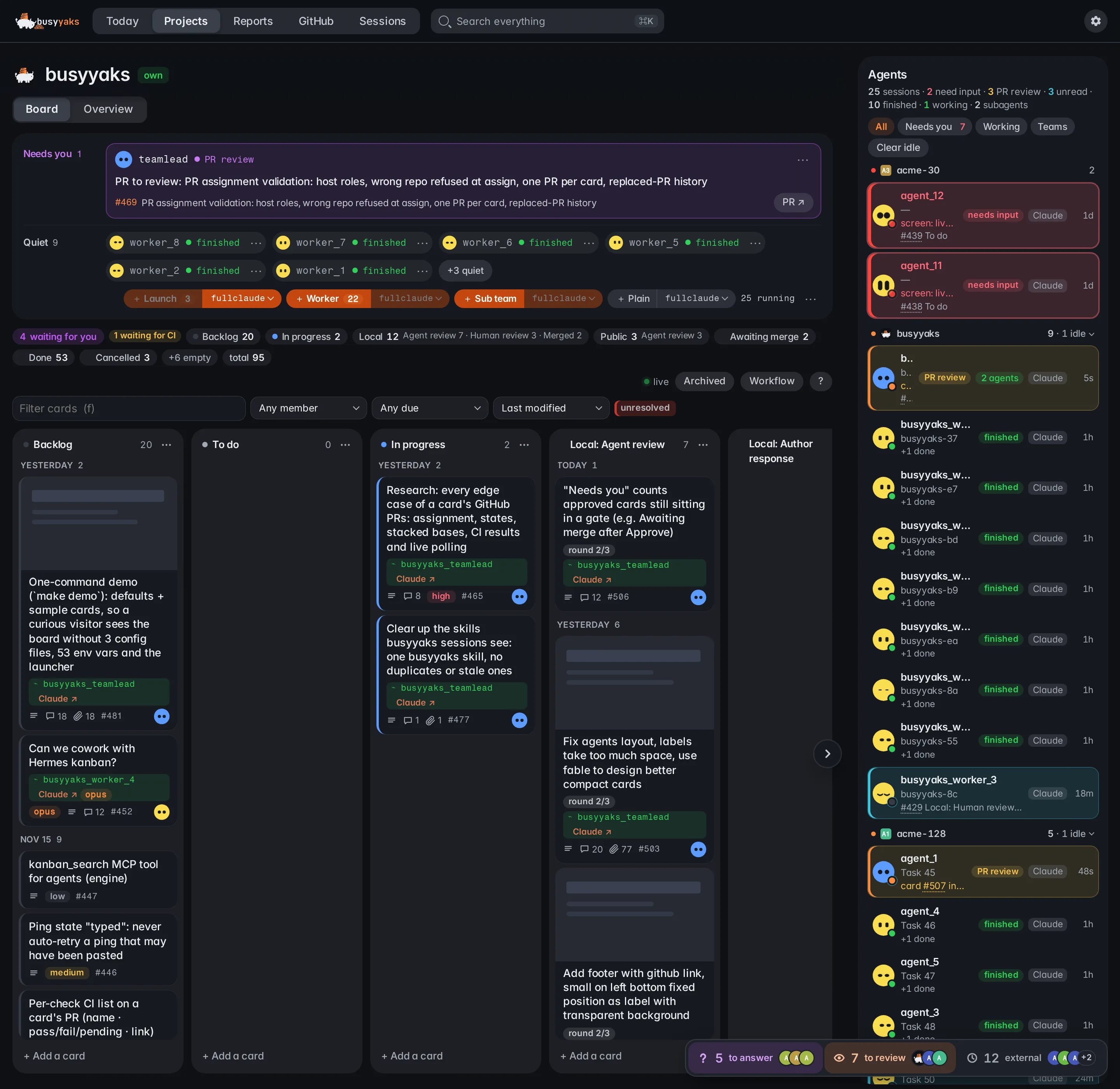
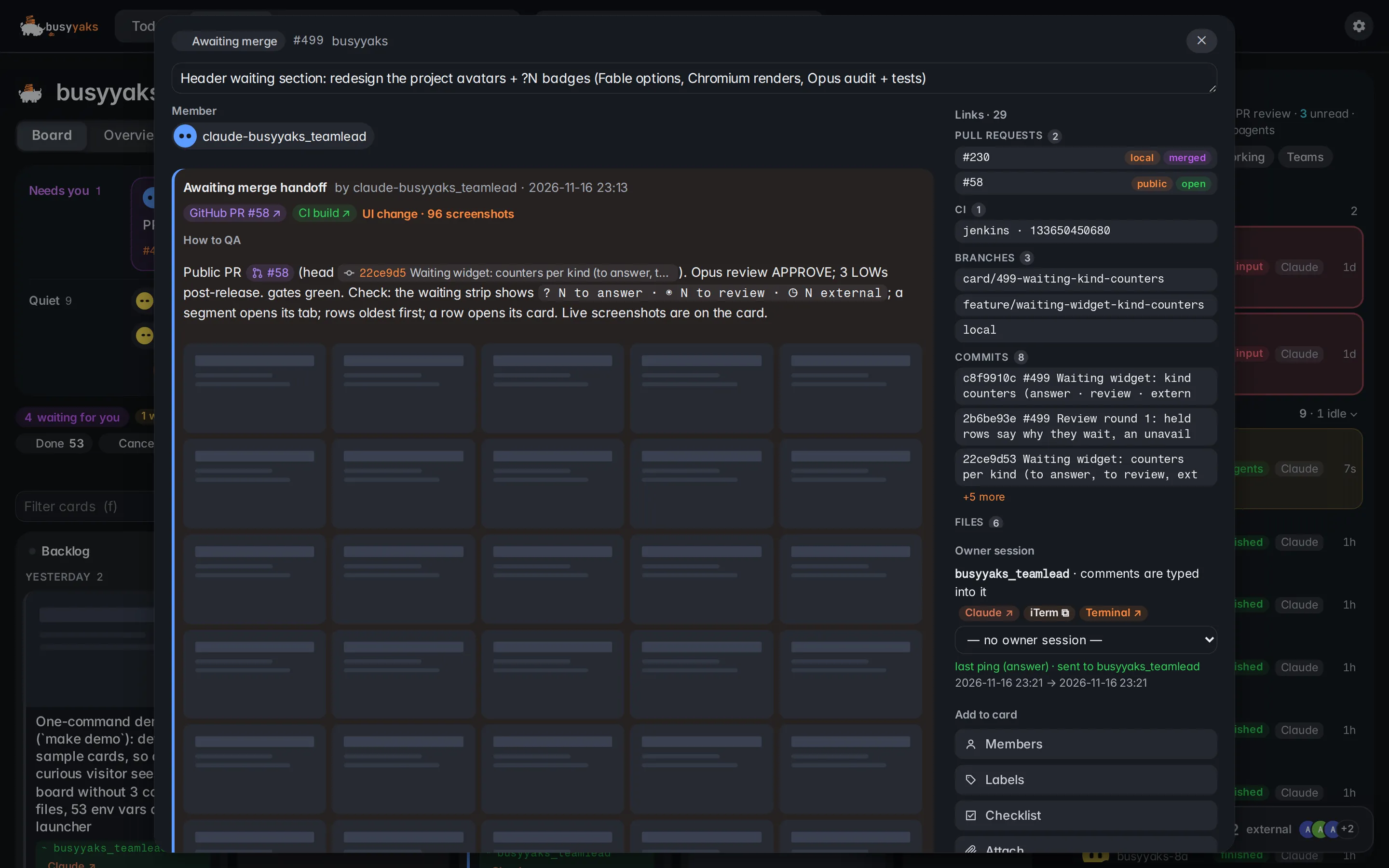
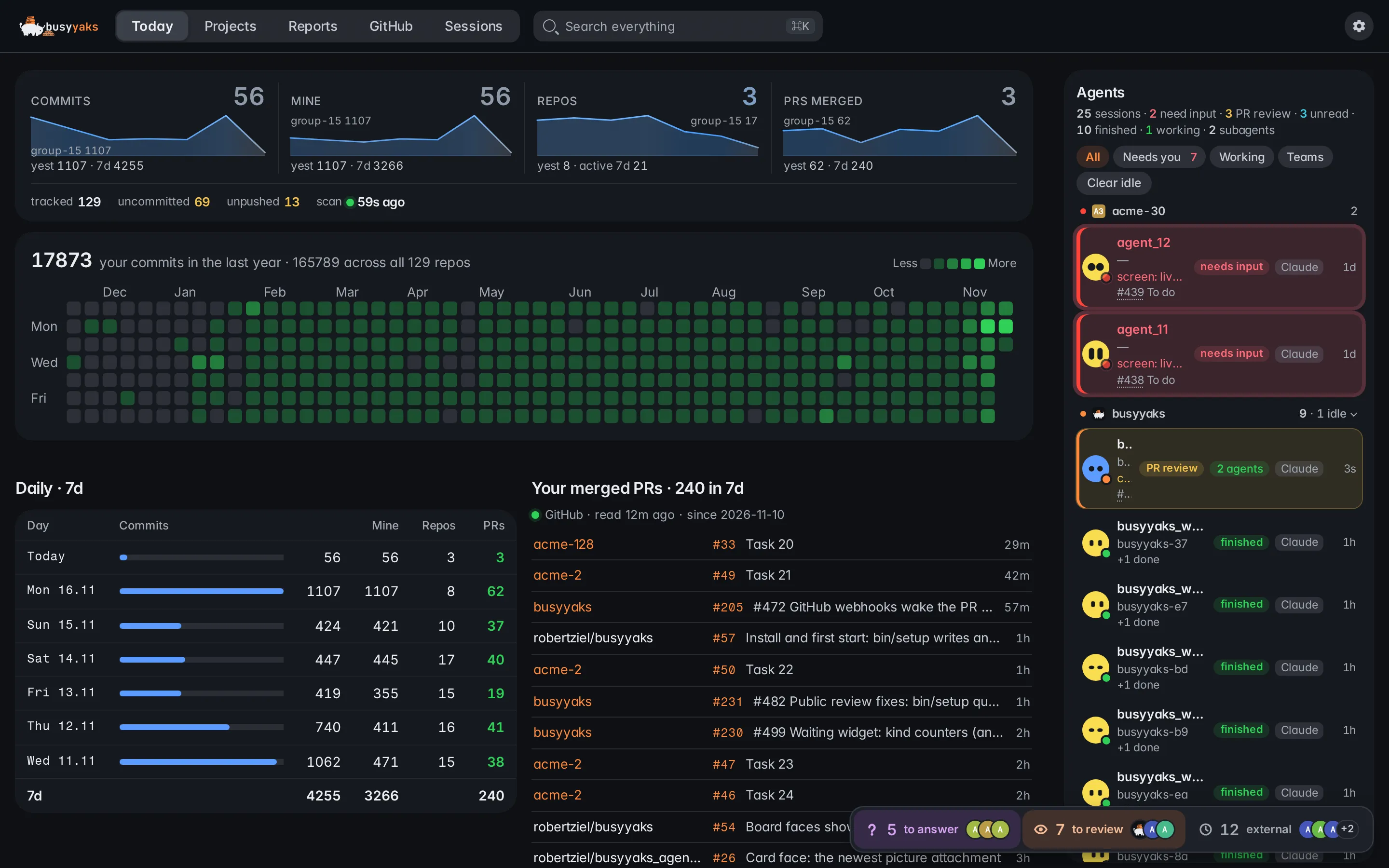
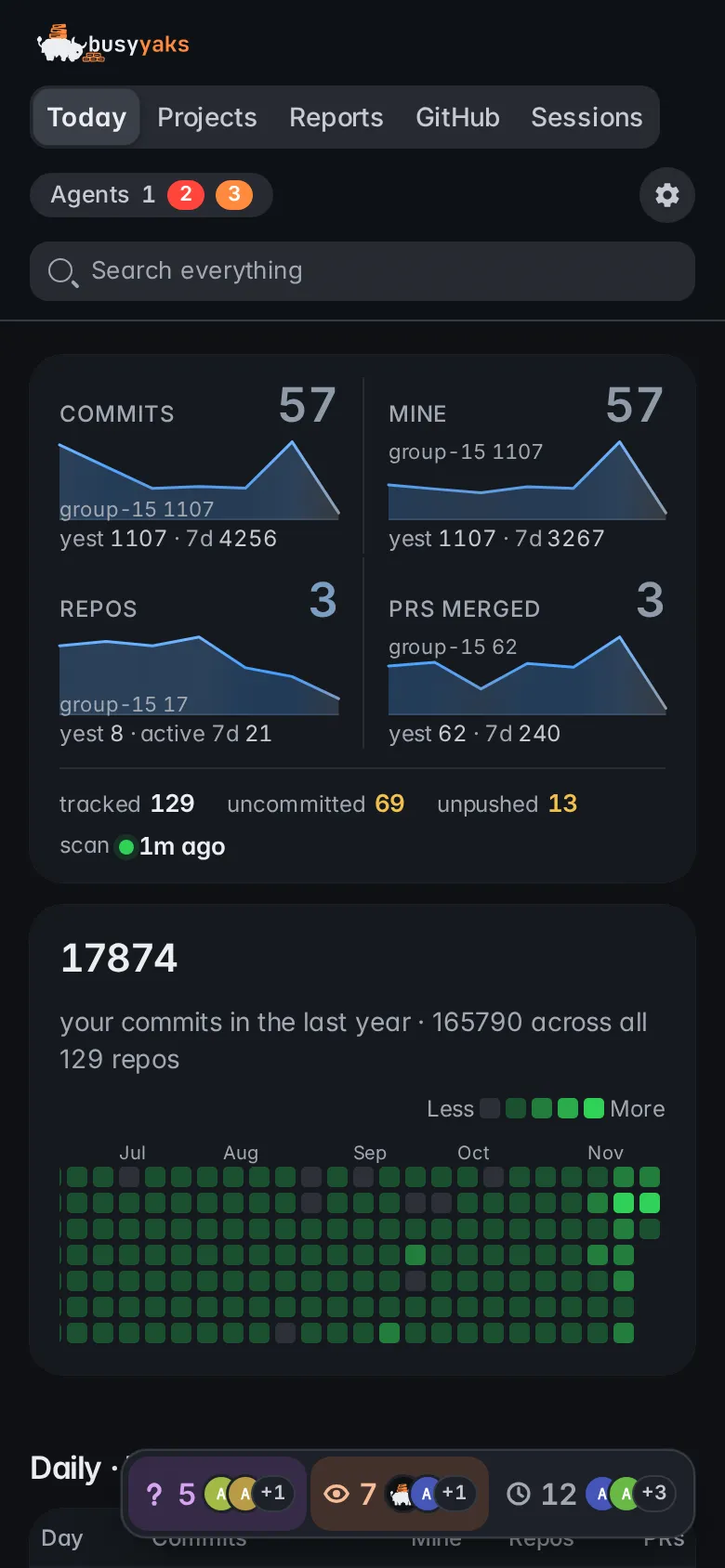
How it works operator → board → lead → workers
- 1 Card You write a card on the repo’s board, or an agent creates one in Backlog.
- 2 Lead One lead session per board adopts the cards waiting for you and spawns a worker per card.
- 3 Claim The worker claims the card (kanban_claim) with its tmux session: comments and moves are typed into it.
- 4 Ask A question goes on the card (kanban_ask): it keeps its column, the options become buttons.
- 5 Hand over kanban_handoff carries QA steps, the PR, the CI build and, for a UI change, screenshots; it is refused while CI is unread or red.
- 6 Approve Only you move a card out of Human Check. The agent merges after that.
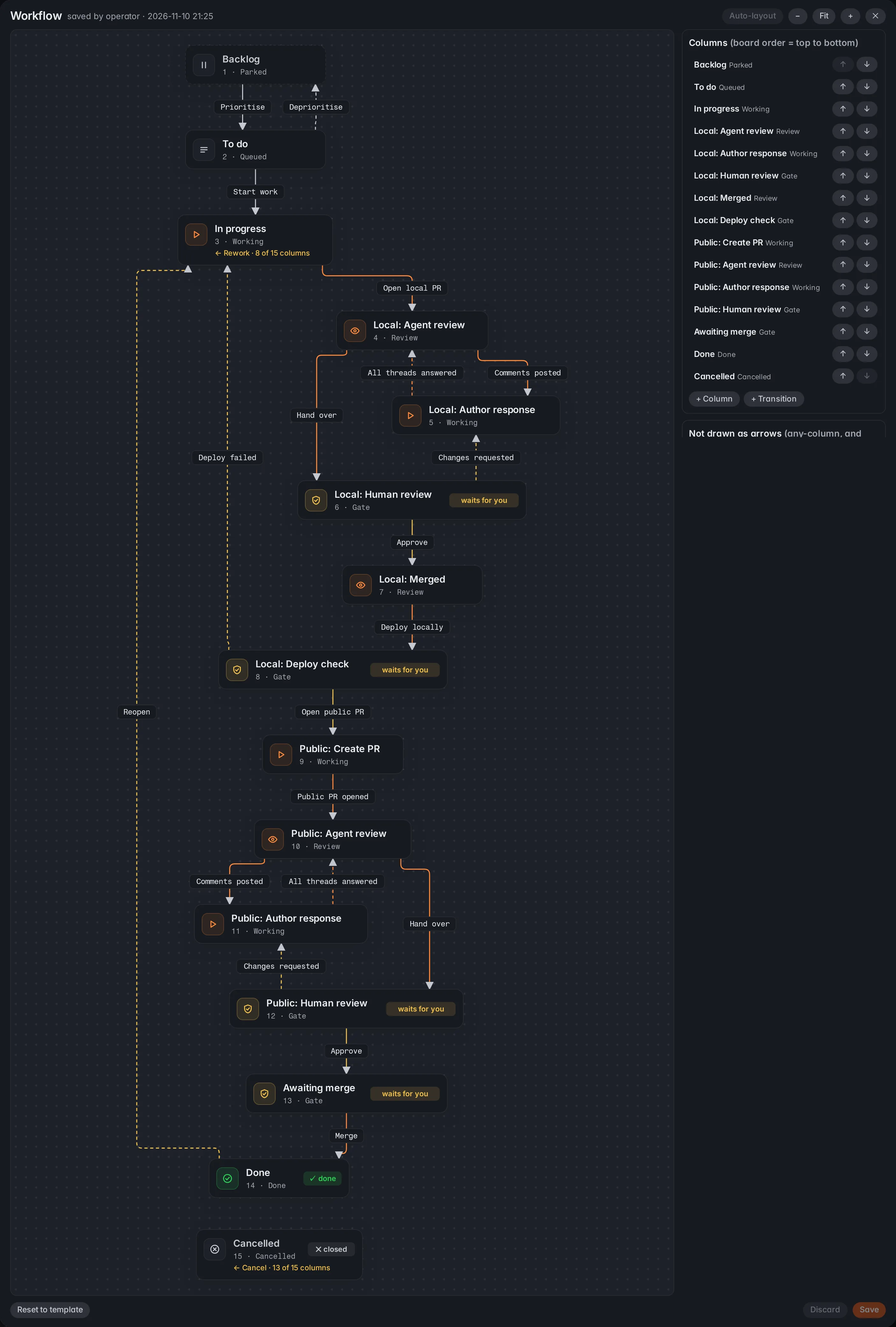
The workflow 7 columns · 6 column types
- Backlogparked
- nobody listens; agents may create cards here
- To doqueued
- waits for a session; a worker can be spawned per card
- In progressworking
- listened; the watchdog releases a card whose session is gone
- QAreview
- a further work column; review rounds are counted
- Human Checkgate
- agents enter only with kanban_handoff; only you approve
- Ready to mergegate
- approved; the agent merges the PR now, never before
- Mergeddone
- finished; owner and assignee kept as history
What runs docker compose + systemd --user
- web container the dashboard SPA and the /api JSON API
- mcp container the MCP endpoint: localhost only, bearer token
- scanner container reads every repo under PROJECTS_ROOT, read-only
- github container merged PRs, PR states, your network; the only holder of the token
- notifier container types your comments and answers into the owning session
- bin/launcher host starts tmux sessions, captures and answers their dialogs
- bin/daily-report host · optional a local LLM writes the report; the server computes every number
- Read the board
- kanban_board · kanban_card · kanban_workflow · kanban_session_board
- Own a card
- kanban_register · kanban_claim · kanban_create · kanban_update · kanban_move
- Talk to you
- kanban_comment · kanban_ask · kanban_block · kanban_unblock
- Hand over
- kanban_pr_assign · kanban_attach · kanban_handoff
- Panel
- whats_new · list_projects · project · daily_facts · github_network · post_report
Quickstart full README →
git clone https://github.com/robertziel/busyyaks && cd busyyaks
bin/setup            # .env + config from the examples, secrets written
$EDITOR .env         # PROJECTS_ROOT, GITHUB_LOGIN, GITHUB_TOKEN, ...
bin/setup check      # every value compose needs, each problem with its fix
docker compose up -d --build --wait web mcp scanner github notifier

# connect Claude Code to the MCP server
vars=$(bin/env MCP_HOST MCP_HOST_PORT MCP_TOKEN) && eval "$vars"
claude mcp add --transport http --scope user busyyaks \
  "http://$MCP_HOST:$MCP_HOST_PORT/mcp" \
  --header "Authorization: Bearer $MCP_TOKEN"

# the host launcher (systemd --user; Ruby 3.2+, tmux, claude)
deploy/install-launcher.sh
Needs
- Linux, Docker Engine 25+, compose 2.20+
- git, a directory of git repos
- a read-only GitHub token
- host Ruby 3.2+ (stdlib only), tmux, the claude CLI
- A team: one operator, no roles beyond operator and agent.
- Not Linux, no tmux, no Claude Code.
- Public, with no identity provider: auth none is for localhost.
- Repos spread over many machines: the scanner reads one directory tree.
- A public endpoint for agents: the MCP server is for local sessions only.
Repositories two repos that move together
Writing on BusyYaks 3 on this site